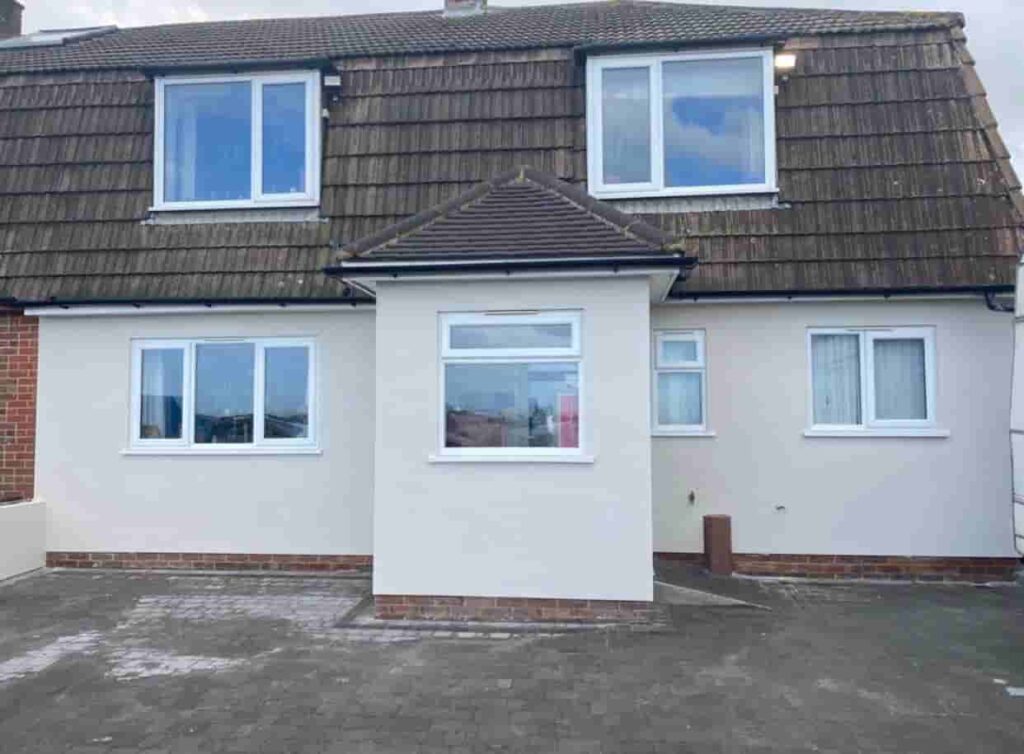
A pitched roof is designed to provide dependable protection from the weather while directing rainfall away from the property. Its sloping construction helps water drain efficiently, but the roof still depends on numerous individual components working together. Tiles or slates, ridge sections, flashing, valleys, underlay and supporting materials can all develop defects over time.
For property owners in Amesbury, Wiltshire, recognising the early signs of pitched roof problems can help prevent relatively contained defects from developing further. A slipped tile or small damp patch does not automatically mean that extensive roofing work is necessary, but it does indicate that the affected area deserves attention. Professional assessment can establish where the problem originates and whether a localised repair is sufficient.
How Can You Tell When a Pitched Roof Needs Professional Attention?
Pitched roof problems can appear both outside and inside a property. Some warning signs are immediately noticeable, such as a missing tile, while others are more subtle, including intermittent damp patches, uneven roof lines or recurring problems around the same section.
The most useful approach is to consider the pattern of deterioration rather than relying on one symptom. Several small warning signs appearing together can provide important information about the condition of the roof.
Missing Roof Tiles Create an Obvious Vulnerability
A missing tile is one of the clearest signs that a pitched roof requires attention.
Tiles are arranged to overlap and direct water down the roof. When one is lost, part of the roofing system beneath can become more exposed to rainfall.
The surrounding tiles should also be inspected.
If neighbouring components remain secure, the problem may be suitable for a relatively localised repair. Where several nearby tiles are loose or damaged, a wider section may need attention.
Slipped Tiles Should Not Be Ignored
A tile does not need to fall completely from the roof before it becomes problematic.
Slipped tiles can move sufficiently to disrupt the normal overlap between neighbouring components. This can create an opening through which rainfall may reach materials beneath the roof covering.
A tile sitting lower than surrounding tiles can therefore be an important early warning sign.
Finding out why it moved is also useful, particularly where similar movement has occurred previously.
Cracked and Broken Tiles Can Allow Water Through
Roof tiles can remain in position despite being cracked.
From ground level, the roof may consequently appear complete even though one or more components have become damaged.
The significance of a crack depends on its position and extent.
Where the integrity of the tile has been compromised, replacement may be required to restore effective coverage and prevent further deterioration around the affected section.
Pieces of Roofing Material on the Ground Can Provide a Clue
Small fragments found around a property can sometimes originate from damaged roof tiles, ridge components or other roofing materials.
This can be particularly useful where the actual defect is difficult to see from ground level.
Finding fragments does not necessarily reveal the exact location of the problem, however.
A professional roof inspection can identify where the material originated and whether surrounding components have also been affected.
An Uneven Roof Line Can Indicate Movement
A pitched roof normally has relatively consistent lines across its slopes.
Tiles that appear uneven, sections that look distorted or noticeable changes in the roof profile can indicate movement that deserves investigation.
The cause may be relatively localised or involve components beneath the visible covering.
Changes in the overall roof line should therefore be considered alongside other warning signs rather than treated purely as a cosmetic issue.
Damp Patches on Ceilings Are an Important Warning Sign
Many roofing problems are first discovered inside the property.
A damp patch or discoloured area on a ceiling can indicate that water has found a route through the roofing system.
The external defect may not be directly above the internal mark.
Water can travel along underlay, timbers or other surfaces before becoming visible, so identifying the true source is important before repairs are carried out.
Intermittent Leaks Still Require Investigation
Some roof leaks appear only during prolonged rainfall or particular weather conditions.
Once the rain stops, the affected area may dry and the problem can seem less urgent.
However, intermittent water ingress still indicates that part of the roofing system is vulnerable.
The conditions under which the leak appears can actually provide useful information when tracing its source.
Water Marks in the Roof Space Can Reveal Developing Problems
Where accessible, the roof space may show evidence of water ingress before substantial staining appears on the ceiling below.
Dark marks, dampness or changes around roof timbers can help identify the general area requiring further investigation.
It is useful to look for the highest visible evidence of moisture rather than assuming the lowest damp area represents the point of entry.
Water can travel after passing through the outer roof covering.
Problems Around Flashing Can Cause Persistent Leaks
Not every pitched roof leak originates from a tile.
Flashing protects vulnerable junctions where different roof sections or building elements meet. If it becomes loose, damaged or deteriorated, water can enter even when the surrounding tiles appear satisfactory.
Recurring dampness close to a roof junction therefore deserves careful assessment.
Replacing nearby tiles without checking the flashing could leave the actual problem unresolved.
Valleys Need to Manage Concentrated Rainfall
Roof valleys collect water from adjoining slopes and direct it towards the drainage system.
Because significant amounts of rainfall can pass through these areas, deterioration around a valley can lead to noticeable problems.
Damaged adjoining tiles, debris or deterioration within the valley itself may interfere with normal water movement.
Leaks associated with valleys should be assessed as a complete roof detail rather than assuming the nearest visible tile is responsible.
Ridge Problems Can Affect the Highest Part of the Roof
The ridge forms an important part of many pitched roofs.
Movement, cracking or deterioration around ridge components can create vulnerabilities near the highest point of the roof.
Water entering here may travel before becoming noticeable inside the property.
Visible changes along the ridge line, particularly loose or displaced components, are therefore worth investigating before further movement occurs.
Repeated Tile Movement Can Indicate a Wider Issue
One slipped tile may represent an isolated defect.
If tiles repeatedly move within the same roof area, there may be a broader reason for the problem.
The condition of fixings, surrounding roofing materials and supporting components may need to be examined.
Repeatedly replacing individual tiles without investigating why they continue moving can result in the same problem returning.
Several Missing or Slipped Tiles Change the Picture
The number and distribution of defects matter.
A single damaged tile within an otherwise sound roof is very different from several missing, cracked or displaced tiles across the same slope.
Multiple defects can indicate that deterioration has progressed beyond one isolated component.
Professional assessment can establish whether individual repairs remain appropriate or whether the affected section needs more comprehensive attention.
Internal Dripping Indicates Active Water Ingress
Visible dripping during rainfall is an obvious indication that water is entering the property.
The priority is to identify the route through the roof rather than simply responding to where the water finally appears indoors.
The source could involve damaged tiles, flashing, a valley or another roof detail.
Systematic investigation helps avoid repairing the wrong area based solely on the position of the internal drip.
Dampness Around More Than One Internal Area Deserves Attention
Several damp patches can indicate multiple defects, although they may also be connected to a single external problem from which water is travelling in different directions.
This is why internal evidence needs to be interpreted carefully.
A professional assessment can compare the position of internal moisture with the construction and condition of the roof above.
This provides a more reliable basis for repair than treating every damp mark as an independent leak.
Daylight in the Roof Space Can Reveal Gaps
Where the roof space can be viewed safely, visible daylight may sometimes indicate a gap within the roof covering.
A missing or displaced tile is one possible cause.
However, the absence of visible daylight does not prove that a roof is watertight. Many small defects capable of allowing water ingress will not create an obvious opening when viewed internally.
Daylight should therefore be treated as one warning sign rather than the only test of roof condition.
Sagging or Distortion Should Be Professionally Assessed
Changes in the shape of a pitched roof deserve particular attention.
A section that appears to dip, sag or differ noticeably from the surrounding roof line may indicate an issue beyond the outer tiles.
The underlying cause needs to be established before deciding what work is appropriate.
Simply replacing the visible covering would not address movement originating within the supporting roof construction.
Debris in Gutters Can Sometimes Point to Roof Deterioration
Gutters naturally collect leaves and other debris, but pieces of roofing material can provide clues about the condition above.
Fragments of tile or other roof components may indicate that something has broken or deteriorated.
The roof should be checked to identify the source.
This can sometimes reveal a developing problem before a noticeable internal leak occurs.
Problems Can Develop Around Roof Edges
The edges of a pitched roof are exposed areas where tiles and other components need to remain properly positioned.
Movement around these sections can leave parts of the roof more vulnerable.
Visible displacement or damaged materials near the perimeter should therefore be investigated.
Early attention can help prevent localised movement from affecting neighbouring roofing components.
Wind Can Reveal Existing Weaknesses
Wind can place additional demands on roof coverings, particularly where tiles or other components are already loose.
A previously minor defect may become much more noticeable after windy conditions.
Tiles can move further, weak components can become displaced and existing gaps may increase.
Checking the roof after obvious changes can help identify whether the problem remains localised or has affected several connected sections.
A Roof Can Have Problems Without an Active Leak
Waiting for water to appear indoors is not always the best way to determine whether a roof needs repair.
Visible tile movement, cracked components, deteriorated flashing or changes in the roof line can all require attention before active water ingress develops.
Early repair can help maintain the continuity of the roof covering.
This is particularly useful when the defect remains confined to a relatively small area.
Recurring Roof Repairs Can Reveal a Pattern
An occasional repair does not necessarily indicate that a pitched roof is generally deteriorating.
However, new problems repeatedly developing within the same section deserve closer investigation.
Several connected components may have reached a similar stage of deterioration, or an underlying defect may not previously have been identified.
Considering the repair history can help determine whether another localised repair is appropriate.
Previous Repairs Should Remain Stable
A professionally repaired roof section should be monitored in the same way as the rest of the roof.
If deterioration appears beside an older repair, it does not automatically mean that the previous work has failed.
Neighbouring materials may simply have deteriorated subsequently.
Assessment can establish whether the issue relates to the original repair or represents a separate defect within the surrounding roof.
Moss or Surface Changes Do Not Automatically Mean Roof Failure
The appearance of a roof can change considerably over time.
Surface growth and weathering can make roofing materials look older without necessarily indicating that they are structurally defective.
Condition matters more than appearance alone.
Cracked, missing or displaced components and evidence of water ingress provide more useful indications that repairs may be required.
An Older Pitched Roof Does Not Automatically Need Replacing
Age should not be considered in isolation.
An older pitched roof may still contain substantial areas of serviceable roofing materials, while a newer roof can occasionally develop an isolated defect requiring repair.
The extent and type of deterioration provide a better basis for deciding what work is necessary.
Professional assessment can identify which components genuinely require attention while preserving sound sections where practical.
When Localised Pitched Roof Repairs May Be Suitable
A focused repair may be appropriate where:
- one or a small number of tiles are missing;
- individual tiles have slipped or cracked;
- damage is confined to a clearly identifiable area;
- a localised flashing defect is responsible for water ingress;
- surrounding roofing remains stable;
- the underlying roof structure appears sound;
- the source of the problem can be clearly identified.
The aim is to address the defect without carrying out unnecessary work elsewhere.
Signs That a Pitched Roof Needs Broader Assessment
A more detailed assessment becomes important where:
- numerous tiles are slipping or missing;
- defects repeatedly return within the same section;
- several internal damp areas are developing;
- visible roof lines have changed;
- ridge or valley deterioration is widespread;
- several previous repair areas require further attention;
- water ingress continues despite localised repairs;
- multiple different defects are appearing together.
These symptoms do not automatically mean that complete roof replacement is necessary. They indicate that the wider condition should be understood before further work is planned.
Why Early Roof Repairs Are Important
Roofing defects rarely improve without intervention.
A slipped tile can move further, a crack can worsen and a small opening can allow repeated rainfall beneath the roof covering.
Addressing a developing problem while it remains localised can help protect neighbouring materials.
Early investigation also provides an opportunity to understand why the defect developed rather than simply responding once substantial water ingress has occurred.
Why Professional Roof Assessment Matters
The most visible defect is not always the true source of a roofing problem.
A missing tile may be obvious while a nearby flashing defect is responsible for the leak. Similarly, an internal damp patch may appear some distance from the external point where water is entering.
Professional assessment considers the roof as a connected system.
Tiles, ridges, valleys, flashing and visible supporting components can be examined together to determine the likely cause and extent of deterioration.
Pitched Roof Repairs in Amesbury, Wiltshire
At MCM Roofing Repairs Amesbury, we understand that pitched roof problems can range from one isolated damaged tile to deterioration affecting several connected components.
The appropriate repair should reflect the actual condition of the roof. Where defects remain localised, targeted repairs can often restore the affected area while retaining sound roofing materials. Where several warning signs are appearing together, a broader assessment can establish what work is genuinely required.
For property owners in Amesbury, Wiltshire, recognising developing roof problems and arranging professional assessment can help prevent smaller defects from being overlooked until they become more extensive.
Conclusion
The most common signs of pitched roof problems include slipped, cracked or missing tiles, damp patches, recurring leaks, deteriorated flashing, ridge or valley defects and noticeable changes in the roof line. Some problems are obvious from outside, while others first become apparent through moisture within the property.
One isolated defect does not automatically mean that a pitched roof requires extensive work. Localised problems can often be repaired effectively when the surrounding roofing remains in suitable condition. However, several warning signs appearing together or repeated defects within the same area can indicate that broader assessment is needed.
The key is to identify both the visible problem and its underlying cause before deciding on the appropriate repair.
If you have noticed damaged tiles, dampness, recurring water ingress or other changes to a pitched roof at your property in Amesbury, Wiltshire, contact MCM Roofing Repairs Amesbury. We can assess the affected area and recommend an appropriate repair based on the actual condition of the roof.
Call us on: 01980 880 394
Click here to find out more about MCM Roofing Repairs Amesbury
Click here to complete our contact form and see how we can help with your roofing needs.